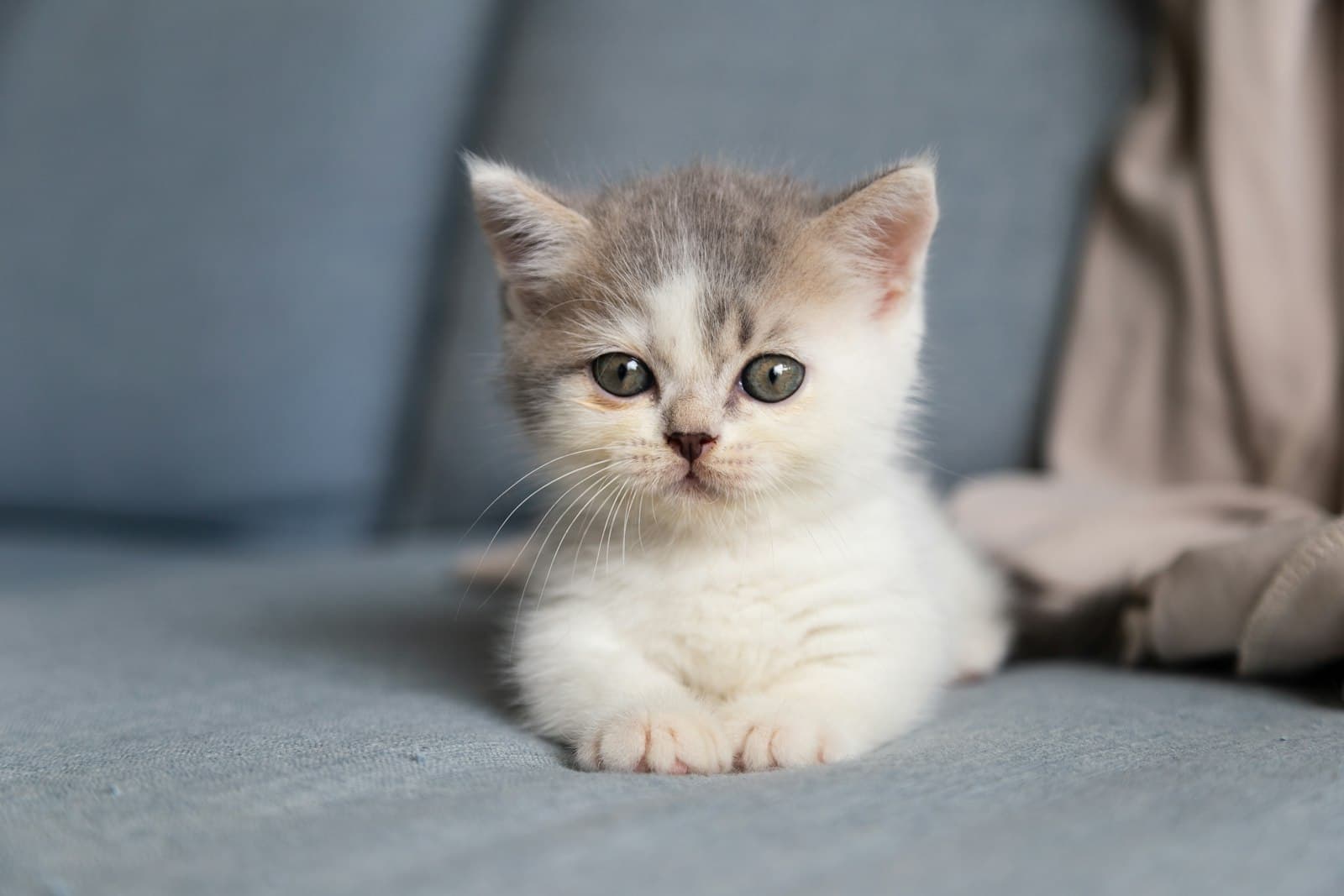
A kitten gets its first combination shot (protection against several feline infections at once) at 6–8 weeks, then repeats it every 2–4 weeks. The final dose of the series must land at 16 weeks or older. The rabies shot is given from 12 weeks. Around six months there is a repeat shot, and after that the combination shot repeats every 3 years.
01Schedule by age
Age
Shot
Note
6–8 weeks
First combination shot
+ leukemia, after a test
10–12 weeks
Second combination shot
+ rabies from 12 weeks
14–16 weeks
Final dose of the series
must be at 16 weeks or later
~6 months
Repeat shot
replaces the old one-year booster
~12 months
Leukemia and rabies booster
then by the shot’s interval
02What these shots are
The combination shot protects against three diseases at once and is shortened to FVRCP: panleukopenia (feline distemper, a severe intestinal infection that is often fatal in kittens), and rhinotracheitis and calicivirus, two viruses that give cats lingering runny noses, sneezing and mouth ulcers. The schedule above is the baseline from the World Small Animal Veterinary Association (WSAVA) and the American Association of Feline Practitioners (AAFP).
03Why a series of several doses
While a kitten nurses, its mother’s antibodies protect it, and those antibodies keep the vaccine from working. This protection fades at a different time in every kitten, so the shot repeats up to 16 weeks: that closes the gap when the kitten is already vulnerable but the vaccine does not yet work. In about a third of kittens the 16-week dose does not take because of leftover maternal antibodies, so around six months there is one more, a repeat shot. It adds no extra injections: it replaces the former one-year booster.
04The feline leukemia shot (FeLV)
Feline leukemia (FeLV in the records) is a contagious viral disease that weakens the immune system and causes tumors; it spreads through close contact between cats. The shot is advised for every kitten under a year, even indoor ones. A blood test comes before the first dose: vaccinating an already infected cat is pointless. The schedule is two doses 3–4 weeks apart. For adult cats the shot continues only while the risk remains: an outdoor cat, or one living with other cats.
Platera reminds you about every kitten shot
A free plan by age, country and lifestyle.
Platera9:00 AM
Mia’s booster shot is tomorrow — clinic at 12:00
Point your camera · App Store
05Frequently asked
Does a kitten need shots if it stays indoors?
Yes. The combination shot and rabies are needed even for an indoor cat: feline distemper is easily carried into the home on shoes, and rabies is required by law in many countries. See the separate article on whether indoor cats need vaccines.
Can I move a kitten shot by a week?
A small shift is fine: doses are usually 2–4 weeks apart. If the gap ran longer than a month, the vet may add one more dose. The final dose of the combination shot should not be given before 16 weeks.
Is a test required before the leukemia shot?
Yes. A blood test for leukemia comes before the first dose: if the cat is already infected the shot will not help, and knowing the diagnosis changes care. The test is usually done at the first vet visit.

 KITTEN · FIRST VACCINE SERIES