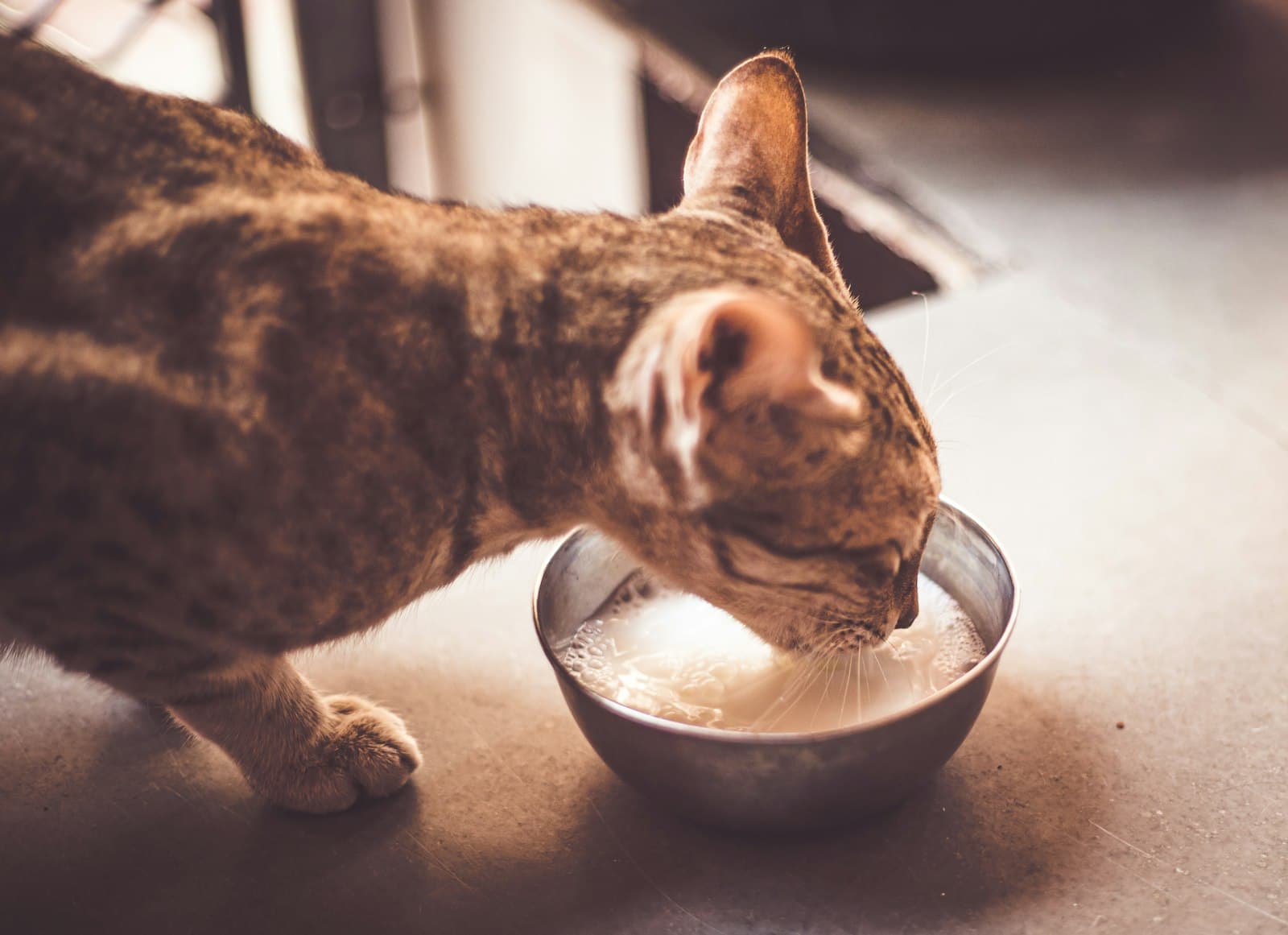
It does not need it. Many adult cats cannot digest lactose, and milk ends in an upset stomach — that is how both the WSAVA leaflet and the Cornell Feline Health Center put it. Even for a cat that tolerates lactose, a saucer takes up the whole daily treat allowance: 59 ml of milk is 27 kcal, and the entire allowance of a 5 kg cat is 25–29.
01What is wrong with milk
Many adult cats do not digest lactose, the sugar in milk. What follows is diarrhoea and digestive upset, and every source says so. The World Small Animal Veterinary Association (WSAVA) keeps milk on its list of treats to avoid for cats, with a footnote about lactose intolerance. The Cornell Feline Health Center advises against dairy for the same reason, the Merck manual adds that milk can upset a cat’s stomach, and the ASPCA poison control centre names diarrhoea.
02A saucer against the daily allowance
WSAVA holds all treats together below 10% of the daily calories. For a 5 kg cat that is 25–29 kcal a day. A 59 ml saucer of semi-skimmed milk already costs 27.
Treat
Portion
Kcal
Semi-skimmed milk
59 ml
27
Cottage cheese, 2%
28 g
25
Cooked prawns
28 g
29
Tuna canned in water
28 g
36
Cooked chicken breast
28 g
47
Cheddar
28 g
120
A 28 g piece of cheddar costs 120 kcal — nearly five times the daily treat allowance of a 5 kg cat and around 40% of its whole daily intake. Milk looks modest beside that, yet it fills the allowance completely and leaves no room for anything useful. The base of the diet stays the complete food either way: a treat never replaces a meal.
03What to spend those 25 kcal on
A cat is an obligate carnivore, which means it depends on nutrients found only in animal products. The treat allowance is therefore better spent on a piece of cooked chicken, a prawn or a ready-made cat treat. As for greens, veterinary sources give no list of safe fruit and vegetables for cats at all — it is simply absent from the four documents checked.
Raw fish does not make the list either. Freshwater fish contains thiaminase, an enzyme that destroys vitamin B1, and a shortage of it hits a cat’s nervous system — far enough that the animal can no longer hold its head up. Cooking destroys the enzyme, so fish in prepared food has nothing to do with this story.
Platera charts your cat’s weight
The curve shows when treats started to tell, well before the eye picks it up.
Platera9:00 AM
Mia’s booster shot is tomorrow — clinic at 12:00
Point your camera · App Store
04Frequently asked
Can kittens drink cow’s milk?
The veterinary leaflets speak about cats in general, and cow’s milk sits there among the treats to avoid. A kitten’s diet rests on kitten food: the Merck manual suggests 3–4 meals a day up to four months, and the Cornell Feline Health Center three meals up to six.
What about lactose-free or fermented milk?
The veterinary sources checked do not cover them separately, so there is nothing to base a confident yes on. The calorie half of the answer does not change: any dairy treat comes out of the same 10% of daily calories, which for a 5 kg cat is 25–29 kcal a day.
My cat drinks milk and is perfectly fine — so what?
Not every cat is lactose intolerant, so getting away without diarrhoea is entirely possible. The arithmetic is unchanged: a 59 ml saucer takes almost the whole daily treat allowance of a 5 kg cat, leaving no room in it for anything of use.
Can cats eat cheese?
28 g of cheddar is 120 kcal, nearly five times the daily treat allowance of a 5 kg cat and about 40% of its daily intake. A tiny piece once in a while does no harm, but cheese does not become a regular treat: it is far too dense in calories.
Can cats eat raw fish?
Freshwater fish contains thiaminase, which destroys vitamin B1. A deficiency in cats brings loss of appetite, neurological signs and seizures, with one telling symptom: the cat cannot hold its head up. Cooking destroys the enzyme. Canned fish meant for people is a separate story — Cornell describes serious neurological disorders in some cats that ate it.

 CAT · MILK AND TREATS