Yes. In October 2024 the American Animal Hospital Association (AAHA) moved the leptospirosis shot into the core group — for every dog over 12 weeks old, regardless of breed, sex or lifestyle, including dogs that live in a flat. The course is 2 doses 3–4 weeks apart, then a booster every year.
01What changed in 2024
The leptospirosis shot used to be given by lifestyle: to dogs that swim in ponds, walk in woodland or spend time on farms. In autumn 2024 the American Animal Hospital Association updated its guidance and made the shot core for every dog over 12 weeks. The decision lines up with the American College of Veterinary Internal Medicine (ACVIM) and the World Small Animal Veterinary Association (WSAVA). How the shot sits in the wider schedule is in adult dog vaccinations.
02Why a city dog is still at risk
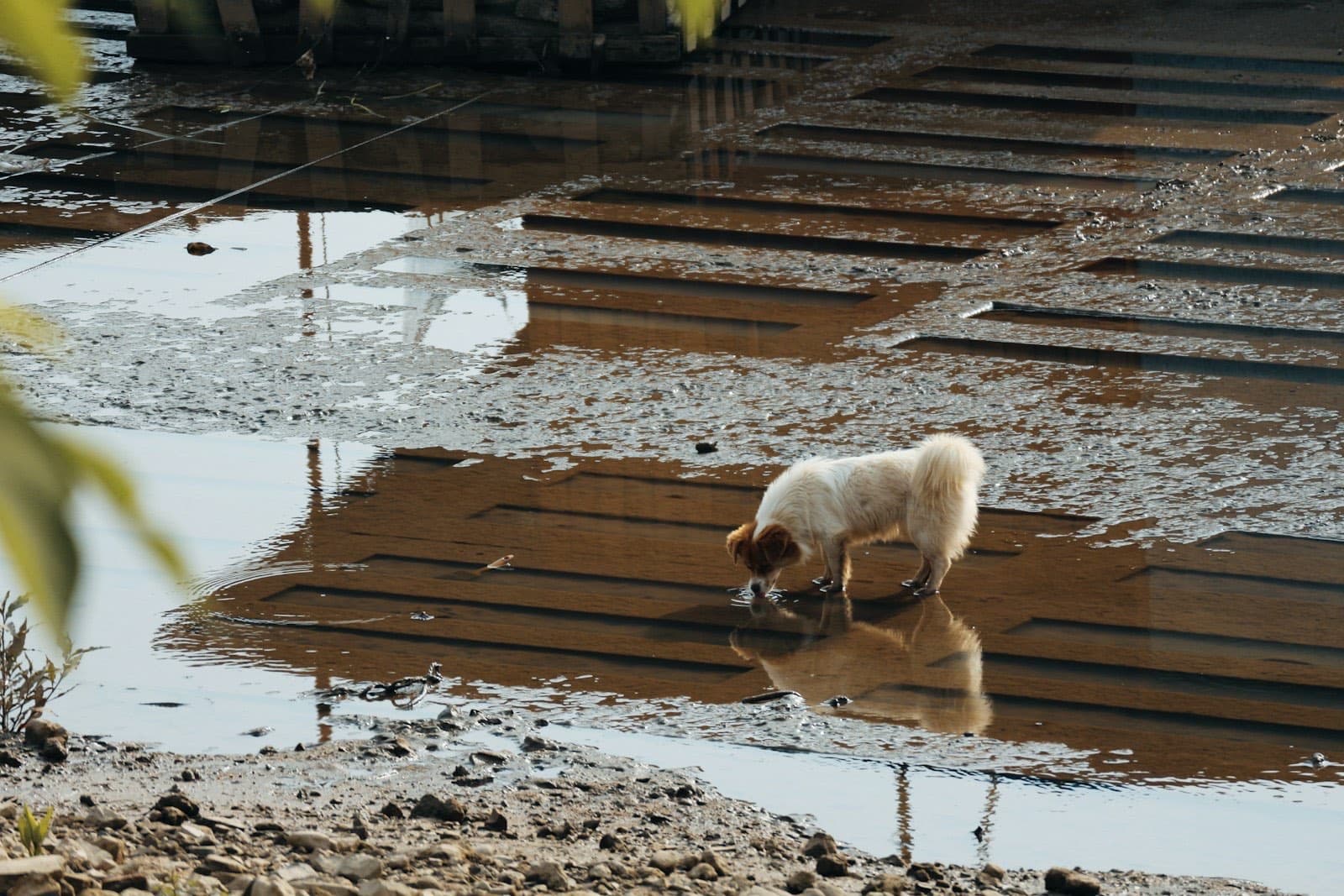
Leptospirosis is a bacterial disease that attacks the kidneys and liver. Among unvaccinated dogs that catch it, 10–20% die. The bacteria are spread by rodents, wildlife and livestock, and they survive in standing water and mud — an ordinary puddle or a storm drain will do. That is why case numbers have grown in cities: a dog that only walks around the block still shares the street with urban rats. The risk exists in every climate, from arctic to tropical.
There is a second reason to vaccinate: leptospirosis is a zoonosis, a disease that passes from animals to people. The one situation where the shot is sometimes skipped is a genuinely dry region with no standing water and no rodents. That call is made with your vet — the default is to vaccinate.
03The schedule
When
What happens
Notes
8–9 weeks
first dose
never given before 8 weeks of age
3–4 weeks later
second dose
the course is complete after this one
every year
booster
protection lasts about 12 months
a gap over 18 months
course restarts
2 doses, same as the first time
On the record card the vaccine usually appears as L4: it covers four varieties of the bacteria, the ones behind most clinical cases. It can share a visit with the combination shot and with rabies — no separate appointment is needed.
Platera reminds you about the yearly booster
Leptospirosis is easy to miss: its interval is shorter than the combo.
Platera9:00 AM
Mia’s booster shot is tomorrow — clinic at 12:00
Point your camera · App Store
04Frequently asked
Does an indoor city dog need the leptospirosis vaccine?
Under the 2024 update yes — lifestyle no longer decides it. The bacteria are carried by urban rats and survive in puddles and standing water, so the shot is advised even for a dog that only walks around the block. Skipping it is worth discussing only in dry regions with no standing water and no rodents.
Why yearly, when the combination shot is every 3 years?
The leptospirosis vaccine has a short immune memory: protection lasts about 12 months, so the booster is annual. The combination shot against distemper, hepatitis and parvovirus holds much longer, and after the puppy series it is repeated every 3 years.
What if more than 18 months have passed without a booster?
The course starts over: two doses 3–4 weeks apart, exactly as the first time. This sets leptospirosis apart from the combination shot, where one dose is usually enough after a long gap. There is a separate article on a missed dog vaccination that covers this.
How old does a puppy have to be for the leptospirosis shot?
The first dose is given at 8–9 weeks and never before 8 weeks, the second 3–4 weeks later. It usually shares the appointment with the second dose of the combination vaccine, so no extra visit is needed. After that the dog is boosted once a year.

 DOG · LEPTOSPIROSIS