Veterinary leaflets do not split bones into raw and cooked: the World Small Animal Veterinary Association (WSAVA) puts both in the same sentence about danger. A bone breaks teeth, blocks the oesophagus or the gut, and causes constipation. The dental benefit bones are usually given for is one the same body declines to confirm.
01Where “raw is fine” comes from
The rule that cooked bones are dangerous and raw ones are not sounds reasonable: a cooked bone splits into sharp shards, a raw one bends. Veterinary documents draw no such line. In its owner leaflets — the canine and the feline one alike — WSAVA puts cooked and raw bones in one line and asks owners to avoid them. Excessively hard chews go the same way: antlers, hooves and anything with sharp edges.
The main argument for bones is dealt with in the leaflet on raw meat-based diets. The wording leaves no room: feeding bones does not reduce the risk of plaque or tooth loss due to periodontitis. Bones are given for the dog’s enjoyment and a presumed dental benefit; what they deliver is broken teeth, intestinal or oesophageal obstruction and constipation.
02What to give a dog instead
If the bone is there to keep the dog busy, chews and food do the same job — with calories taken into account. WSAVA keeps all treats together under 10% of the daily intake; for a 10 kg dog that is 47–59 kcal a day. Ordinary chews sit awkwardly against that ceiling.
Treat
Portion
Kcal
Rawhide bone
190 g
700
Dried pig’s ear
56 g
242
Dried tripe stick
28 g
217
Cooked chicken breast, skinless
28 g
47
One rawhide bone is 700 kcal: about half the daily energy of a 45 kg dog and four to five daily treat limits. The same 28 g of cooked chicken breast costs 47 kcal, while carrot, cucumber and green beans are named in veterinary leaflets as the low-calorie option. Peel, seeds and stones come off before serving, each new item is offered on its own, and you watch the reaction.
03If the bone has already been eaten
A swallowed bone is a reason to call the clinic and describe what went in and when. WSAVA names the three outcomes worth that call in plain words: broken teeth, obstruction of the oesophagus or the intestine, constipation. The rest of what a dog should not get from the table is in foods toxic to dogs.
Platera keeps the pet’s record
Check-ups, weight and notes in one place — no recalling dates at the appointment.
Platera9:00 AM
Mia’s booster shot is tomorrow — clinic at 12:00
Point your camera · App Store
04Frequently asked
Can dogs have raw bones?
Veterinary leaflets make no exception for them: WSAVA writes about cooked and raw bones in the same line. The popular rule that raw bones are safe does not appear in these documents. Raw meat also carries bacteria, and that is a risk for the people in the house as well as the dog.
Do bones really clean a dog’s teeth?
The WSAVA leaflet on raw diets says it outright: feeding bones does not reduce the risk of plaque or tooth loss due to periodontitis. So for a presumed dental benefit a dog gets broken teeth, obstruction and constipation, while the benefit itself is not confirmed by the documents.
What about antlers and hooves?
WSAVA asks owners to avoid excessively hard chews — antlers and hooves — and anything with sharp edges. The logic matches bones: too hard breaks teeth, and sharp edges are dangerous once swallowed.
How many treats can a dog have per day?
WSAVA holds the line below 10% of the daily calories, and a treat never replaces a meal. For a 10 kg dog that is 47–59 kcal a day, roughly 28 g of cooked chicken breast. A single 700 kcal rawhide bone overshoots that limit four to five times over.
Can cats have bones?
The feline WSAVA leaflet carries the same wording as the canine one: cooked and raw bones can be very dangerous and cause significant damage if chewed or swallowed. There is no separate, gentler rule for cats in the documents.

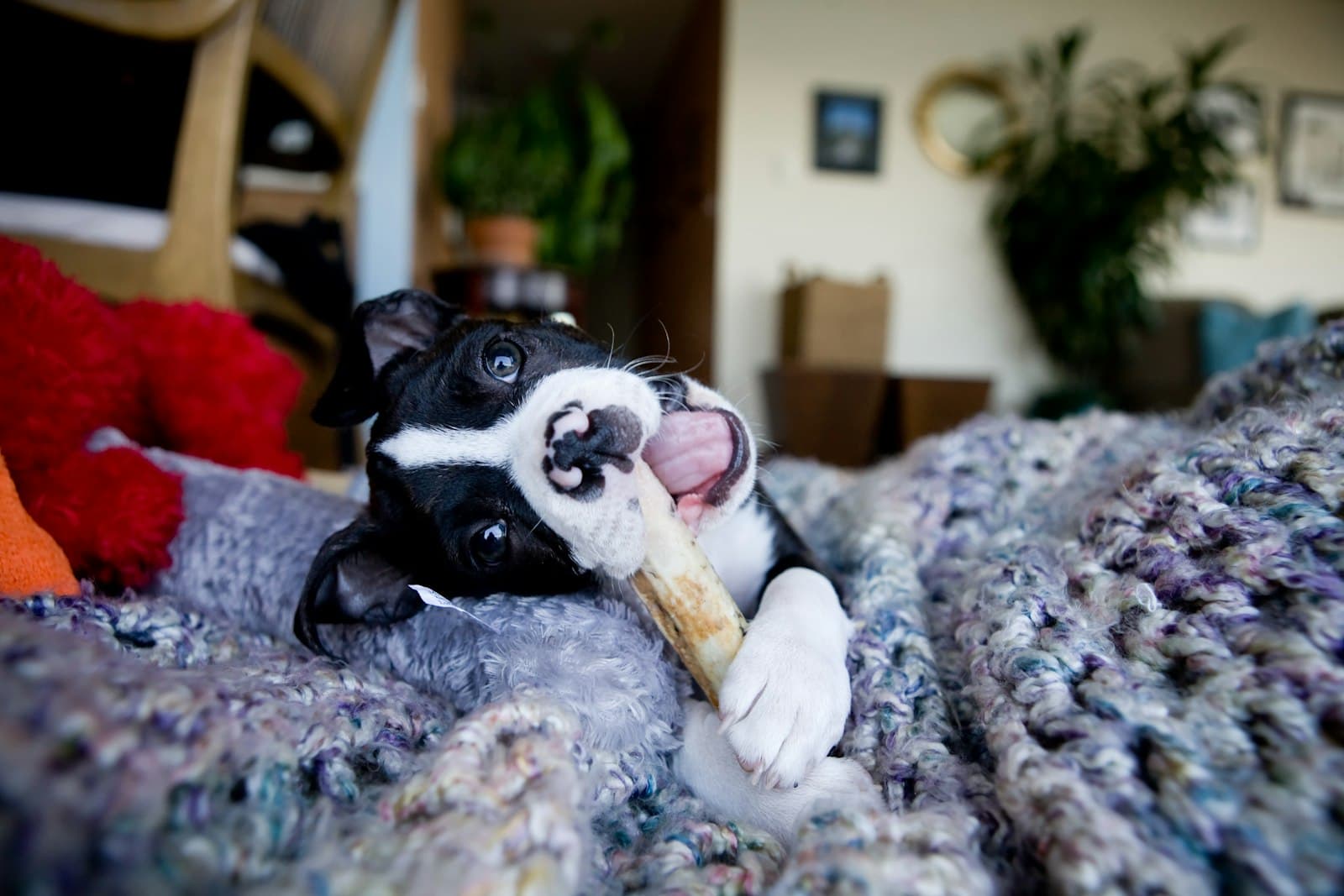 DOG · BONES AND CHEWS