Blog/Nutrition

How often to feed a kitten: meals per day by age
How often to feed a kitten: meals per day by ageKITTEN · MEALS PER DAY
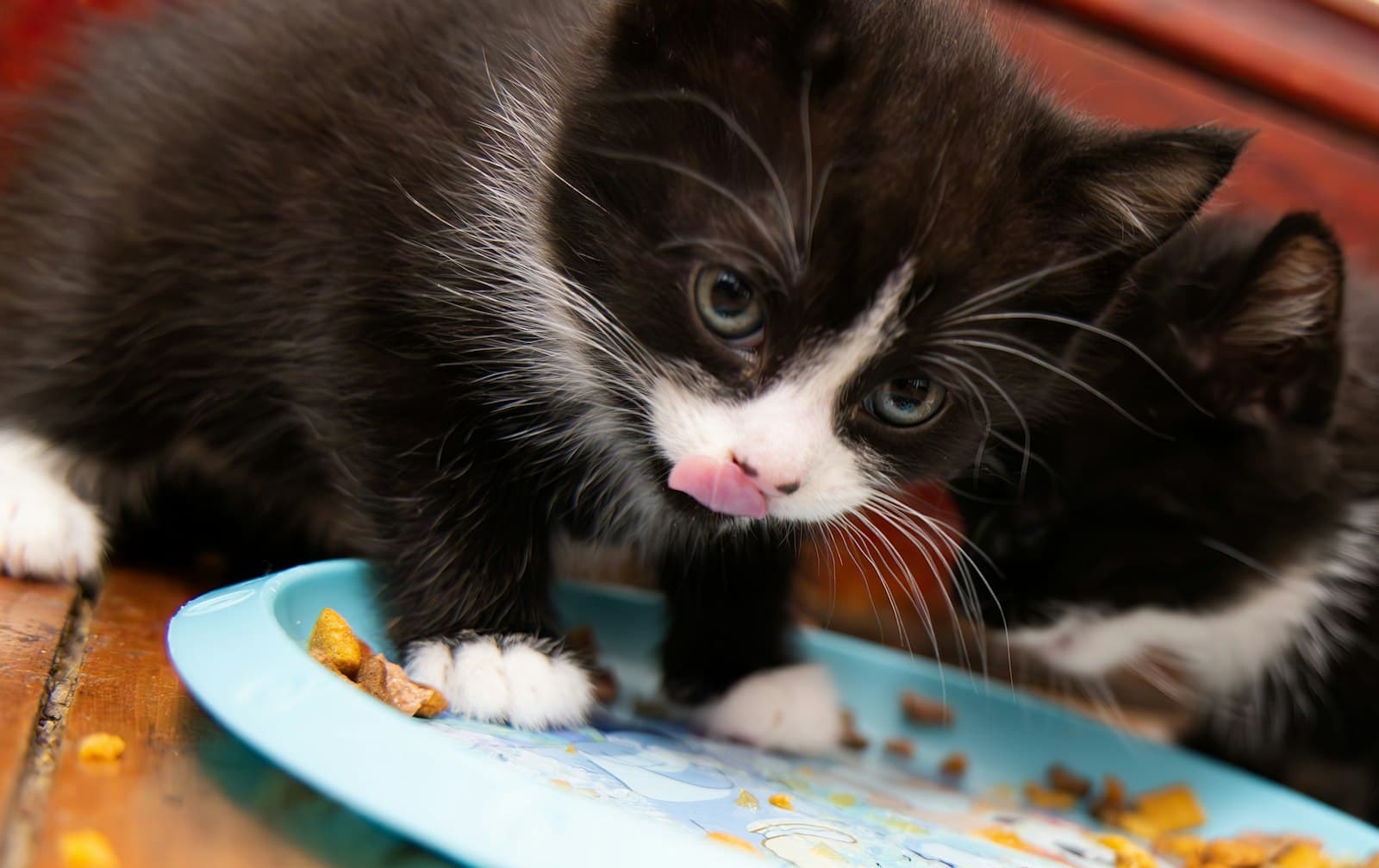
Often at first, and less so as the kitten grows. The Merck Veterinary Manual suggests 3–4 meals a day up to four months; the Cornell Feline Health Center gives three meals up to six months. From six months to a year it is twice a day, and an adult cat eats once or twice. Merck keeps kitten food on the menu until 9–12 months.

01What each manual says, age by age

A kitten has a small stomach and grows fast, so meals come often in the early months and get fewer with age. Both sources agree on that. They differ on where the line falls, and seeing both is more useful than seeing an average of the two.

Age
Merck
Cornell
Up to 4 months
3–4 meals a day
3 meals a day
4–6 months
not broken out
3 meals a day
6–12 months
not broken out
2 meals a day
Over 12 months
usually twice a day
once or twice a day

The two agree on substance and differ on the boundary: Merck holds the frequent meals to four months, Cornell to six. There are no rows for 4–6 and 6–12 months under Merck at all: the manual does not break those stretches out, and there is nothing to fill in on its behalf. The food itself changes on a separate clock: under Merck a growing cat stays on kitten food until 9–12 months.

02A steady routine beats an exact number

Cornell puts the main point plainly: pick a feeding pattern and keep it constant. Free feeding, with dry food left in the bowl all day, suits some cats and leads others to overeat and gain weight. Merck allows free feeding for growing kittens, and for pregnant and nursing cats.

If a kitten on free feeding eats its share and stops there, the pattern works. If the bowl is empty by lunchtime and the weight climbs faster than expected, measured portions at set times are the sensible switch. The milestones of the first year are easier to keep together: the feeding schedule sits next to the kitten vaccination schedule.

03What should not go in the bowl

Milk is the most common mistake. Many cats do not digest lactose and end up with an upset stomach, which is why the World Small Animal Veterinary Association (WSAVA) lists milk among the treats to avoid. It is also expensive in calories: 59 ml is 27 kcal, while the whole daily treat allowance of a 5 kg cat is 25–29. The full case is in can cats drink milk.

Dog food does not become a regular diet for a cat either, and the Merck manual states so directly. A cat is an obligate carnivore, meaning it depends on nutrients found only in animal products: taurine, arachidonic acid, preformed vitamin A and niacin all have to arrive with the food. A shortage of taurine, for one, leads to heart disease and damage to the retina.

WSAVA holds all treats together below 10% of daily calories and adds that a treat never replaces a meal. There is no single figure across organisations: the VCA clinic network names 5%, Cornell 10–15%. For a growing kitten the price of an unbalanced diet is higher than for an adult cat: painful skeletal disorders and pathological fractures are what WSAVA describes, with puppies and kittens in mind.

Platera keeps a kitten calendar

The first year is dense with dates: vaccines, parasite treatments, check-ups and weigh-ins in one timeline.


Platera9:00 AM
Mia’s booster shot is tomorrow — clinic at 12:00
Point your camera · App Store
Download on the App Store

04Frequently asked

How often should I feed an 8-week-old kitten?
That age falls in the first band for both sources: the Merck Veterinary Manual suggests 3–4 meals a day up to four months, and the Cornell Feline Health Center three meals up to six months. The exact number within that range matters less than consistency: whatever pattern you pick, keep it every day.
When do you switch a kitten to adult food?
The Merck manual keeps kitten food going to 9–12 months. By then the number of meals is already down: the Cornell Feline Health Center feeds twice a day from six months to a year, and once or twice a day from the first birthday.
Can I leave dry food out all day for a kitten?
Free feeding suits some cats and leads others to overeat and gain weight: that is how the Cornell Feline Health Center puts it. For growing kittens, and for pregnant and nursing cats, the Merck manual does allow it. Either way the point stands: keep the chosen pattern constant.
Can kittens drink cow’s milk?
Cow’s milk sits on the list of treats to avoid for cats: many do not digest lactose, and digestive upset follows. There is a calorie side too: 59 ml of milk is 27 kcal, while the entire daily treat allowance of a 5 kg cat is 25–29 kcal.
Can a kitten eat dog food?
Not as a regular diet, and the Merck manual says so outright. A cat needs taurine, arachidonic acid, preformed vitamin A and niacin, all of which must come from the food. A taurine shortage leads to heart disease and retinal damage, and dog food is not formulated with a cat in mind.
How many treats can a kitten have?
The World Small Animal Veterinary Association (WSAVA) keeps all treats together below 10% of daily calories, and a treat never stands in for a meal. There is no single standard: the VCA clinic network names 5%, Cornell 10–15%. The base of the diet stays a complete kitten food in any case.
Sources
Merck Veterinary Manual — Feeding Practices in Small Animals
Cornell Feline Health Center — Feeding Your Cat
WSAVA Global Nutrition Guidelines and owner toolkit